Transcranial Magnetic Stimulation (TMS): A Fast-Acting, Drug-Free Path to Recovery
Transcranial Magnetic Stimulation (TMS) is a modern, non-invasive approach to treating depression. It is highly recommended for individuals who have not found relief through standard antidepressants or traditional therapy.
Understanding TMS Therapy
TMS offers a rapid, medication-free solution for mental health. It serves as a vital alternative for those with treatment-resistant depression or those looking to avoid the systemic side effects associated with oral medications.
- Clinically Proven Success: Extensive scientific research indicates that two out of every three patients treated with TMS experience a significant clinical benefit.
- Supporting Your Transition: Under professional medical supervision, TMS can be a powerful tool for patients who wish to reduce their antidepressant dosage or transition away from medication entirely. The magnetic stimulation provides essential neurological support during this process.
Frequently Asked Questions
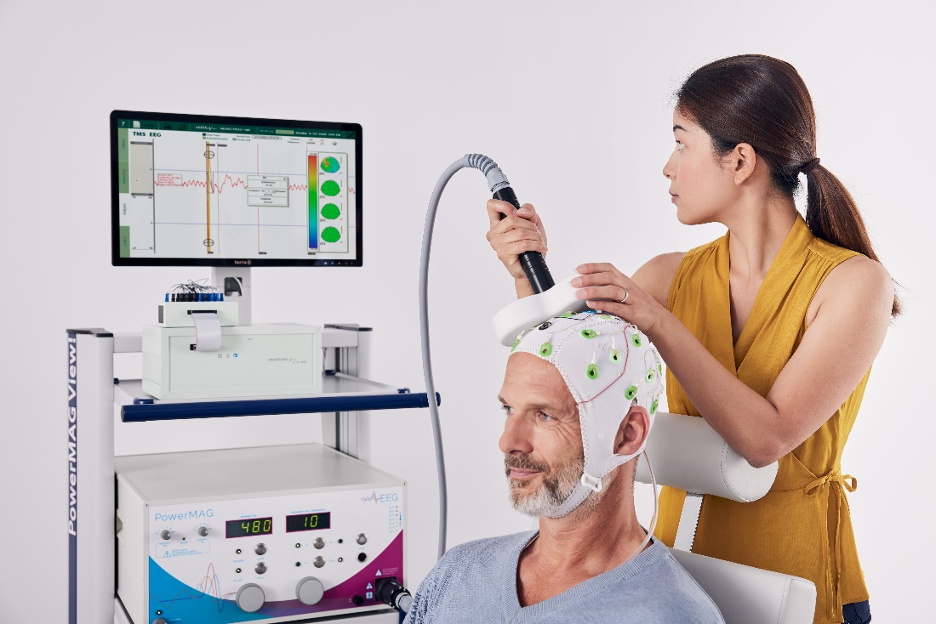
Transcranial Magnetic Stimulation (TMS), or repetitive TMS (rTMS), is a non-invasive neurological treatment. It utilizes focused magnetic fields to stimulate nerve cells in the specific regions of the brain that regulate mood. By improving neurotransmitter activity, these magnetic pulses make long-term remission possible, even when other treatments have failed.
TMS is FDA-approved for individuals facing:
- Severe Major Depressive Disorder (where medication has not been effective)
- Obsessive-Compulsive Disorder (OCD)
- Anxious Depression
Additionally, TMS is used “off-label” for PTSD, Tinnitus, and smoking cessation. While clinical evidence supports these uses, they are generally not covered by insurance providers.
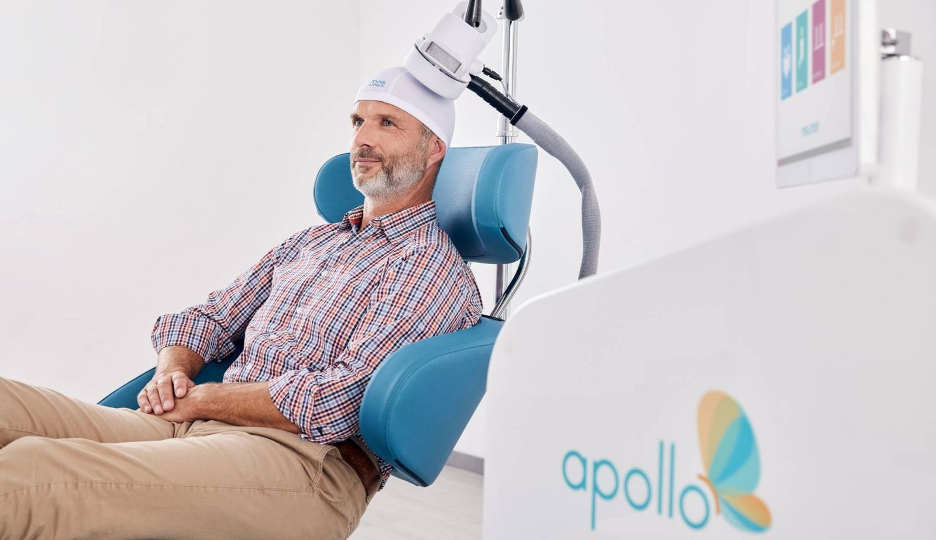
During your 30-minute session, you will relax in a comfortable treatment chair. A small magnetic coil is placed lightly against your head, delivering a gentle tapping sensation and a clicking sound. This process painlessly stimulates the brain’s mood-control centers. Patients often listen to music or audiobooks during treatment. Because no sedation is required, you can drive yourself to and from appointments and resume your normal daily routine immediately.
While standard antidepressants can take six weeks or longer to show results, TMS is known for its speed. Many patients report improvements in their mood as early as the first week of treatment. For the most durable results, a full course of approximately 36 sessions is typically required.
TMS is prescribed by a provider specifically trained in TMS protocols and motor threshold mapping. The daily sessions are administered by an experienced technician under the provider’s direct supervision.
Standard sessions last about 30 minutes. Most patients receive treatment five days a week over a seven-week course. This schedule may be adjusted based on your specific clinical progress.
TMS is exceptionally well-tolerated. The most frequent side effect is a mild headache, which usually diminishes within the first two weeks and can be treated with over-the-counter pain relief. Some patients may also experience minor scalp irritation at the treatment site, which typically resolves quickly.
Safety is our first priority. Patients with non-removable metal implants in their head (excluding braces or dental fillings) should not receive TMS. The magnetic field may cause these objects to move or heat up, posing a serious risk.
Contraindications include:
- Aneurysm clips or coils
- Stents in the neck or brain
- Deep brain stimulators
- Electrodes for monitoring brain activity
- Metallic implants in the ears or eyes
- Shrapnel or bullet fragments in or near the head
- Facial tattoos with magnetic-sensitive or metallic ink
- Any other implanted metallic devices in or near the head
Our team will make every effort to secure prior authorization from your insurance carrier. If coverage is not granted, we offer a self-pay program. Pricing for this program varies depending on your diagnosis and the severity of your condition. Please contact us to schedule a consultation.
Take the Next Step Toward Healing
We are committed to helping you find a treatment plan that works. Please fill out the short form below, and someone from our care team will be in touch. Thank you!